Madhyamaheshwar
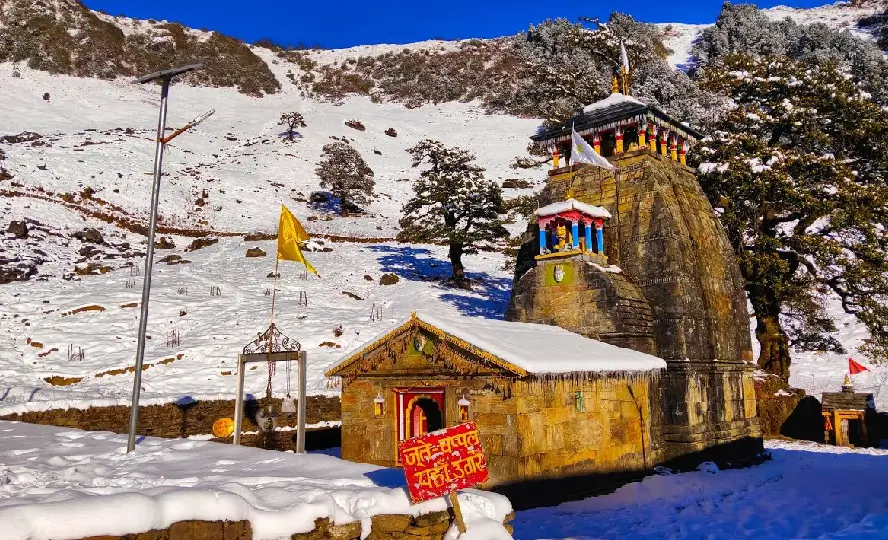
The name “Madhyamaheshwar” comes from two words: Madhya (Middle) and Maheshwar (Lord Shiva).
According to the Mahabharata legend, when Lord Shiva took the form of a bull to elude the Pandavas, his body parts reappeared at five different places.
At Madhyamaheshwar, the Navel (Stomach) of the bull is believed to have appeared.
Inside the temple, the Shiva Lingam is uniquely shaped like a navel and is made of black stone.
Vishwanath Temple Guptakashi
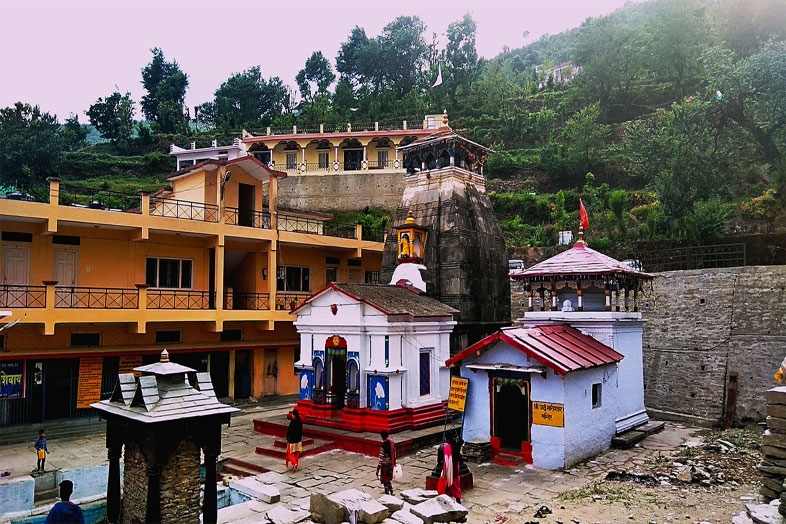
The Pandavas’ Quest: After the Kurukshetra war, the Pandavas sought Lord Shiva to repent for their sins. Shiva, not wanting to meet them, hid in Guptkashi in the form of a bull (Nandi) before later reappearing in Kedarnath.
Kartik Swami Temple
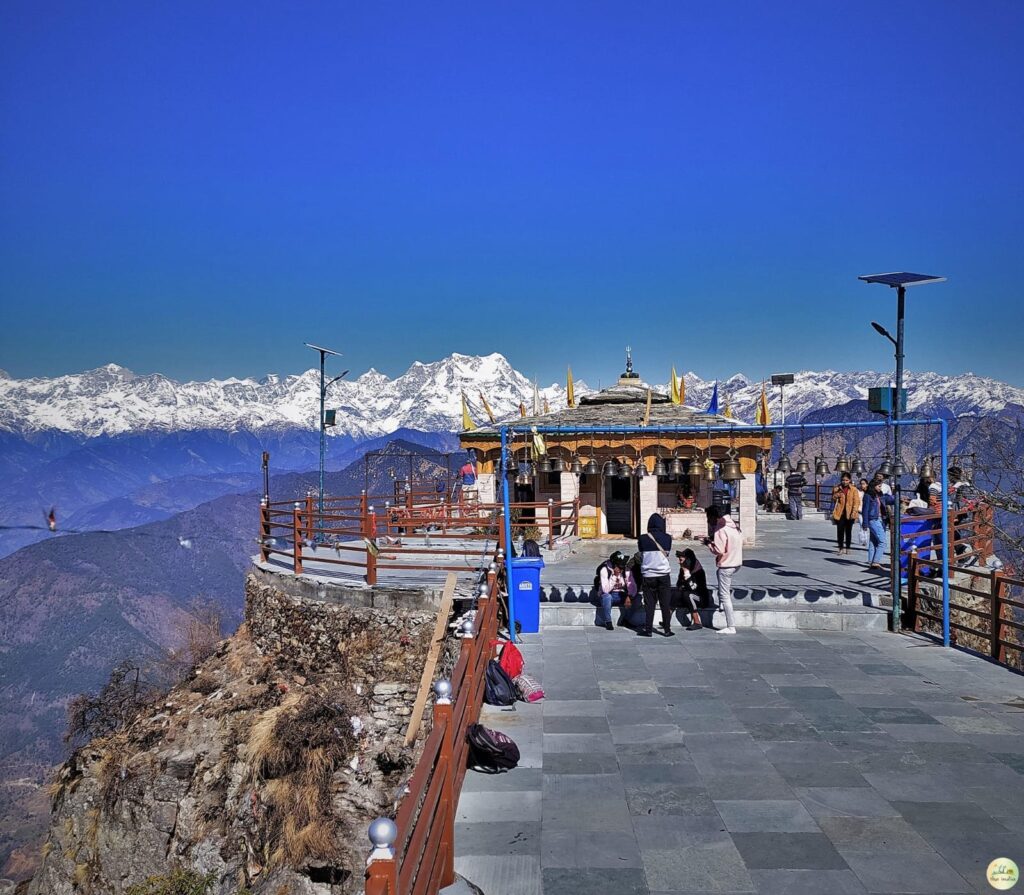
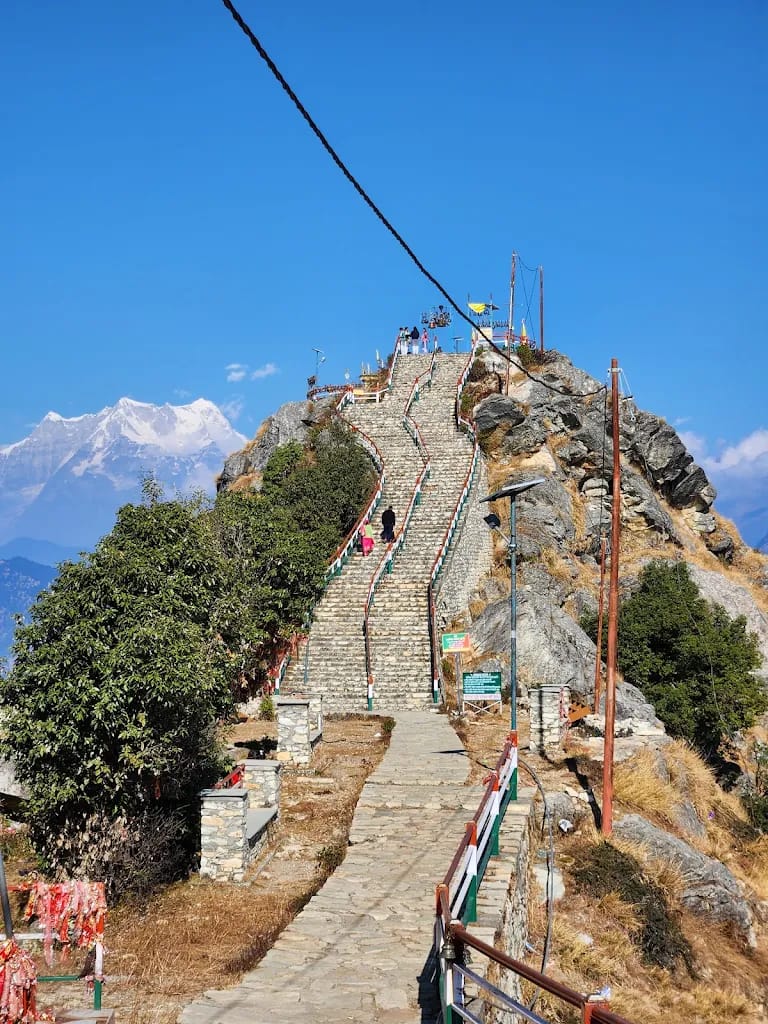
Kartik Swami Temple is a hidden gem in Uttarakhand and is the only temple in North India dedicated to Lord Kartikeya (the elder son of Lord Shiva). Perched on a dramatic narrow ridge atop the Kronch Parvat, it is famous for its breathtaking 360-degree views of the Himalayas.
Here is everything you need to know:
1. Spiritual Significance & Legend
The “Bone” Worship: According to mythology, after losing a race around the universe to his brother Ganesha, an enraged Lord Kartikeya sacrificed his physical self (flesh and skin) to his father Shiva as a sign of devotion. It is believed his bones are enshrined here in a naturally carved stone idol.
The Sound of Bells: Thousands of bells are tied to the temple by devotees. The sound of these bells echoing across the mountain ridges is a deeply spiritual experience.
2. The Trek
Base Camp: The trek begins from the peaceful village of Kanakchauri.
Distance: A steady 3 km uphill walk.
Difficulty: Easy to Moderate. The path is well-paved with stone steps and passes through dense forests of Oak and Rhododendron.
Duration: It takes about 1 to 1.5 hours to reach the top.
Anusuya Devi Temple
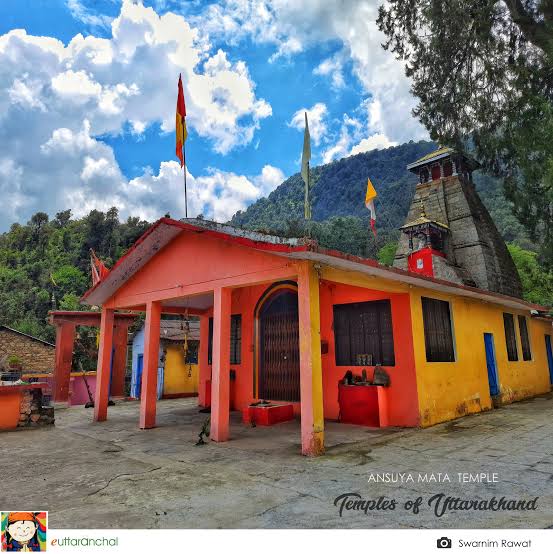
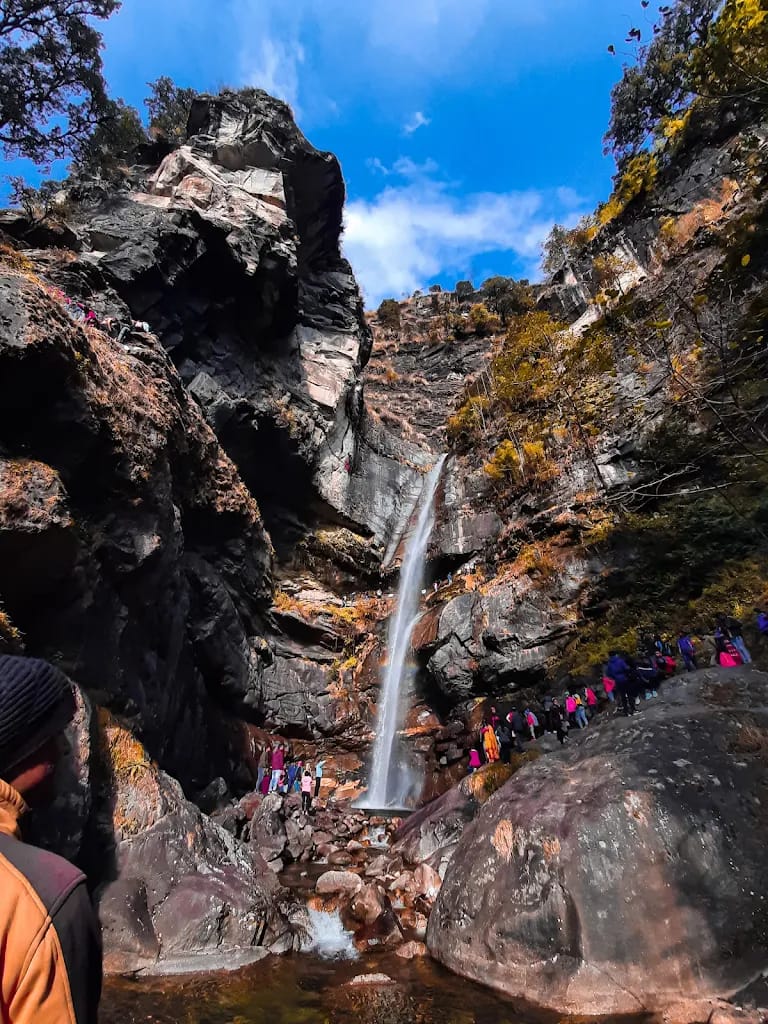
Located in the Chamoli district of Uttarakhand, the Anusuya Devi Temple and Atri Muni Ashram are significant pilgrimage sites nestled in the lap of the Himalayas. This circuit is famous not just for its spiritual energy, but also for its breathtaking trekking trails and waterfalls.
1. Anusuya Devi Temple
This temple is dedicated to Sati Anusuya, the wife of Sage Atri. She is revered as the epitome of chastity and devotion.
The Legend: According to Hindu mythology, the Trinity (Brahma, Vishnu, and Shiva) came to test Anusuya’s devotion. Through her spiritual power, she turned them into infants and nurtured them. This spot is believed to be where that divine event occurred.
The Deity: It is a popular belief that couples seeking children find blessings here. Every year, during Dattatreya Jayanti (usually in December), a large fair is organized where devotees keep a night-long vigil with lamps.
Altitude: Approximately 2,000 meters above sea level.
2. Atri Muni Ashram
About 2 km further trek from the Anusuya Devi Temple lies the cave ashram of Sage Atri.
The Cave & Waterfall: The ashram is set inside a natural cave. Right next to it is the Amrit Ganga waterfall, a stunning sight where the water falls from a great height.
Unique Ritual: It is said to be one of the few places where devotees perform a Parikrama (circumambulation) around an entire river/waterfall as a mark of respect.
The Kalishila Temple
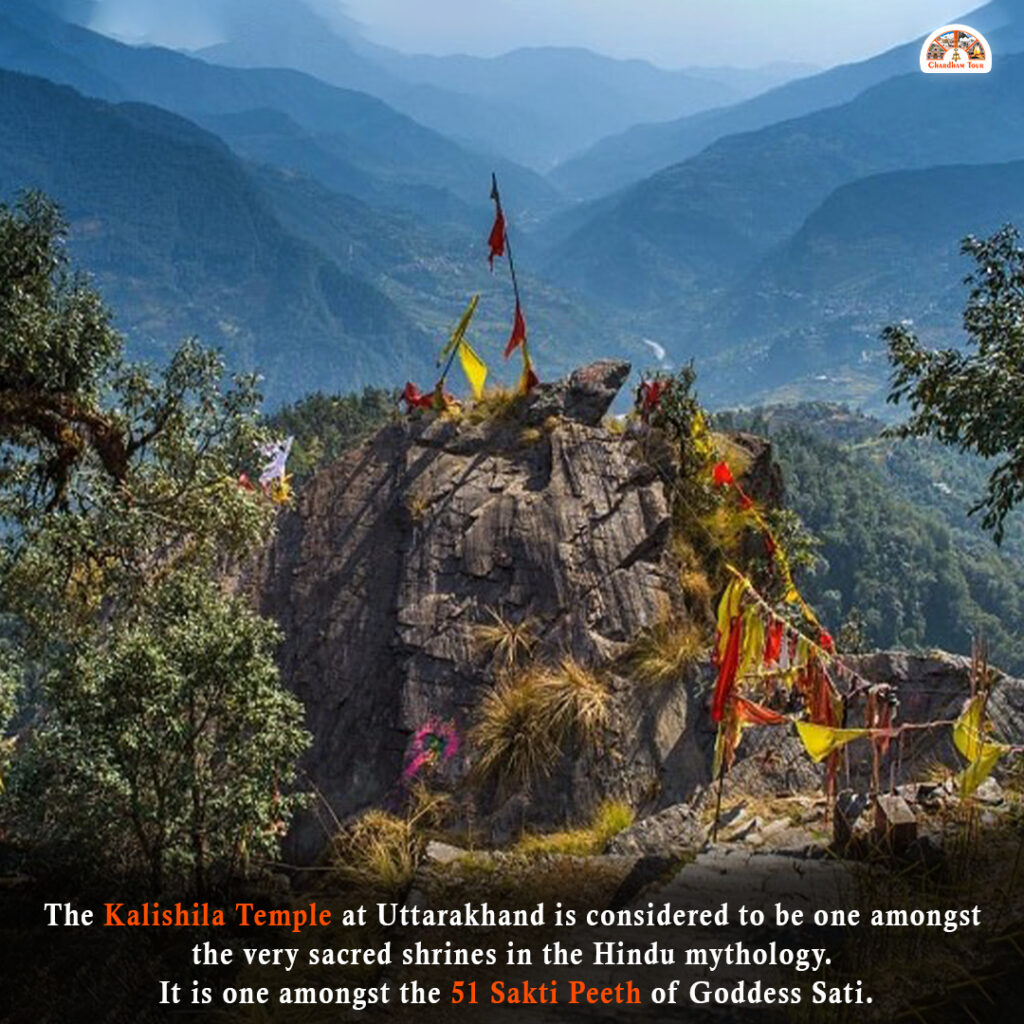
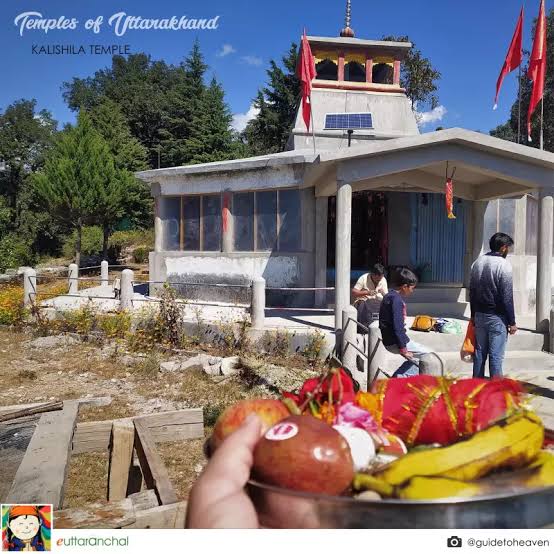
The Kalishila Temple (also known as Shakti Shila) is one of the most powerful and spiritually charged shrines in Uttarakhand. Located in the Rudraprayag district, it sits high above the famous Kalimath Temple.
Unlike traditional temples, Kalishila is centered around a massive sacred black rock (Shila) rather than an idol.
1. Spiritual & Mythological Significance
Shakti Peeth: It is considered one of the 51 (some traditions say 108) Shakti Peeths. It is believed that Goddess Sati was reborn as Goddess Parvati at this very spot.
The Legend of Raktabija: According to the Skanda Purana, this is where Goddess Kali took the form of a 12-year-old girl to battle the demons Shumbh, Nishumbh, and Raktabija.
The 64 Yantras: The rock is said to contain the markings of 64 divine Yantras (mystical diagrams). Devotees believe that Goddess Kali derived her immense power from these Yantras to defeat the demons.
Divine Footprints: You can see impressions on the rock that are worshipped as the footprints of Goddess Kali.
2. Location and Altitude
Altitude: Approximately 3,463 meters (11,360 feet) above sea level.
View: Because of its height, it offers a stunning 360-degree view of the Himalayan peaks, including Chaukhamba and Kedarnath.
Lakshmi Narayan Temple
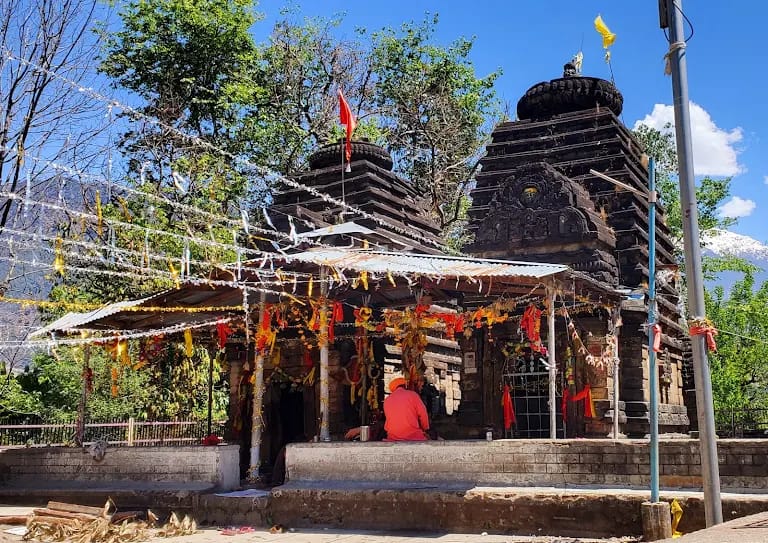
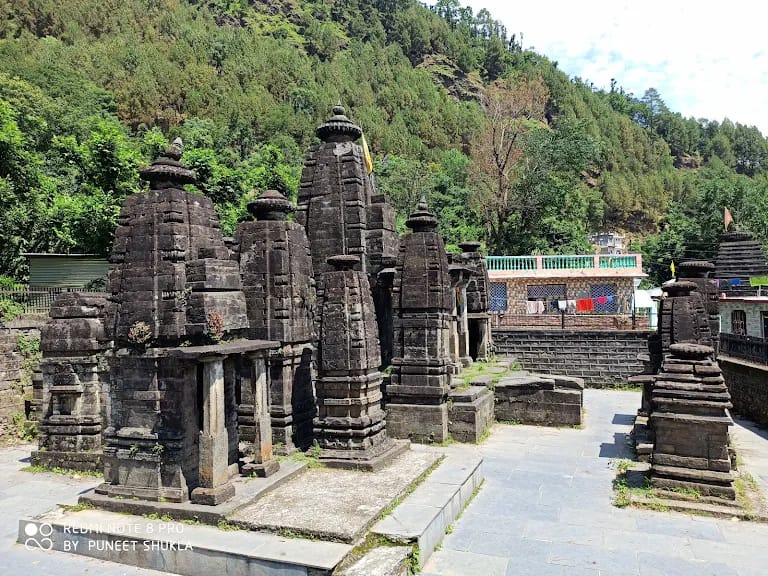
The Lakshmi Narayan Temple at Narayankoti (often referred to as the Narayan Koti Temple Group) is an ancient and spiritually significant site located in the Rudraprayag district of Uttarakhand. It is famous for being a unique cluster of temples that blends the worship of Lord Vishnu with planetary deities.
1. Historical & Spiritual Significance
The Group of Temples: Originally, the site is said to have housed 360 temples. Today, only about 29 to 30 temples survive. These structures are believed to have been built around the 9th century AD or even earlier.
The Legend of Pandavas: According to local folklore, after the Kurukshetra war, the Pandavas were seeking Lord Shiva to atone for their sins. When they were unable to find him, Lord Krishna manifested one crore (Koti) forms of Narayana (Lord Vishnu) at this spot to comfort them, hence the name Narayankoti.
Navagraha Temples: This is considered the only place in India where temples dedicated to all nine celestial bodies (Navagrahas)—Sun, Moon, Mars, Mercury, Jupiter, Venus, Saturn, Rahu, and Ketu—are present in a single group.
2. Key Architectural Features
Main Shrine: The primary temple is dedicated to Lakshmi Narayana (Lord Vishnu and Goddess Lakshmi).
Virbhadra Kund: The complex features a sacred stone tank or stepwell known as Virbhadra Kund (or Brahmakund). Two small streams, representing the Ganga and Yamuna, continuously flow into this tank.
Style: The temples are built in the classic North Indian stone architectural style, featuring intricate carvings that have withstood centuries of harsh Himalayan weather.
Kalimath Temple
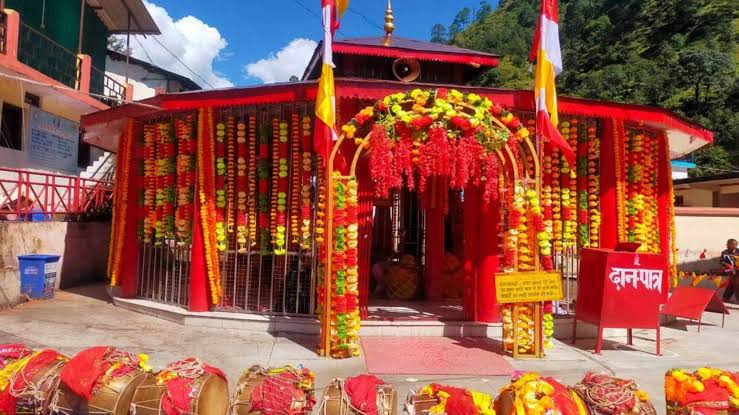
Kalimath Temple is one of the most spiritually powerful and mysterious shrines in India. Located in the Rudraprayag district of Uttarakhand at an altitude of 1,800 meters, it is nestled on the banks of the Saraswati River (locally called Kali Ganga).
Unlike typical temples, it is defined by what you cannot see, making it a primary center for Tantric worship and devotion.
1. Spiritual Significance & Legend
The Rare Shakti Peeth: It is one of the 108 Shakti Peethas. It is uniquely significant because it is the only “Siddha Peeth” in the Kedarnath valley.
The Legend of Raktabija: According to the Devi Mahatmya, Goddess Kali battled the demon Raktabija here. Since every drop of his blood that touched the ground created a new clone, Kali spread her tongue to drink his blood before it hit the earth.
The Vanishing Point: After defeating the demons, it is believed that Goddess Kali went underground at this exact spot. The “ditch” where she disappeared is the focal point of the temple.
Markandey Rishi Temple
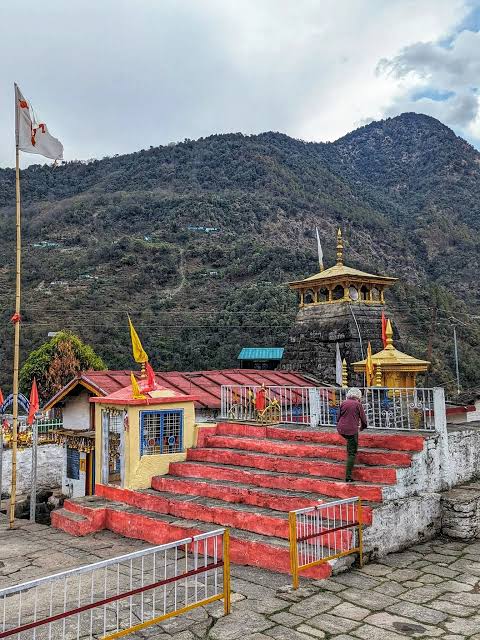
The Markandey Rishi Temple in Makkumath (also known as Makku Math) is a sacred destination in the Rudraprayag district of Uttarakhand. It is deeply connected to the winter worship rituals of the famous Panch Kedar temples.
1. Spiritual Significance
The Legend of Markandeya: The temple is dedicated to Sage Markandeya, a great devotee of Lord Shiva. According to mythology, it was at this spot that the Sage performed intense penance (Tapasya) and was saved by Lord Shiva from Yama (the God of Death).
The Winter Seat: Makkumath is most famous for being the winter seat of Tungnath, the highest Shiva temple in the world. When the Tungnath temple closes due to heavy snow in the winter (usually around November), the symbolic image of the deity is brought down to Makkumath for worship.
Triyuginarayan Temple
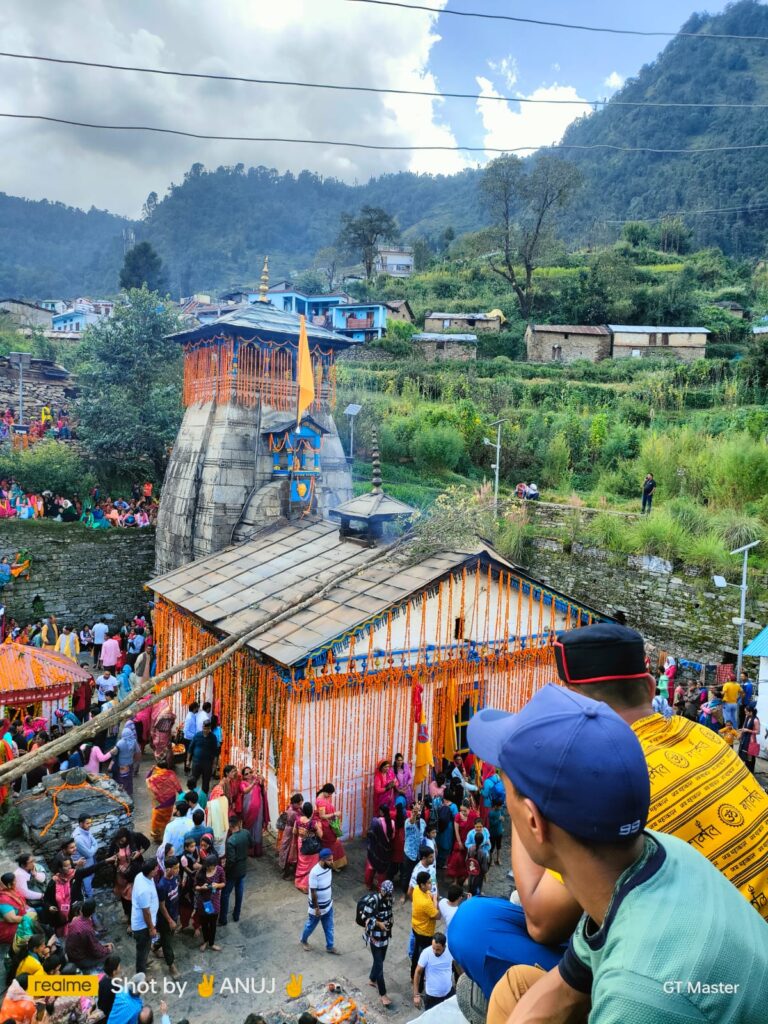
The Triyuginarayan Temple is one of the most significant and romanticized pilgrimage sites in India. Located in the Rudraprayag district of Uttarakhand, it is famously known as the “Wedding Venue of Lord Shiva and Goddess Parvati.”
1. The Legend of the Eternal Marriage
The temple is steeped in a beautiful mythology that attracts couples from all over the world:
The Divine Wedding: It is believed that Lord Shiva and Goddess Parvati were married at this spot in the presence of Lord Vishnu (who acted as the bride’s brother) and Lord Brahma (who acted as the priest).
The Eternal Flame (Akhand Dhuni): A sacred fire has been burning in front of the temple for three Yugas (epochs), hence the name Triyugi (Three Yugas) Narayan (Vishnu). This fire is said to be the same witness fire (Agni) used during the divine wedding.
The Witnesses: Lord Vishnu is the presiding deity of the temple, as he was the witness to the ceremony.
2. Unique Features of the Temple
The Sacred Ashes: Devotees collect ashes from the Akhand Dhuni (Eternal Flame) and take them home, believing they will bring peace and prosperity to their married life.
The Four Kunds (Water Tanks): There are four holy ponds nearby:
Brahmakund: Where Lord Brahma bathed before the wedding.
Vishnukund: Where Lord Vishnu bathed.
Rudrakund: Where Lord Shiva bathed.
Saraswatikund: Where the water is believed to originate from the navel of Vishnu.
Architecture: The temple resembles the Kedarnath temple in style, built of grey stone in the classic Himalayan Panchayatana style.
3. Destination Weddings
In recent years, Triyuginarayan has become a premier destination for “Celestial Weddings.” Many celebrities and couples come here to perform their wedding rituals in front of the Akhand Dhuni to seek the eternal blessings of Shiva and Parvati.